From Chatbot to Colleague: The Dawn of AI Agents That Can Actually Get Things Done
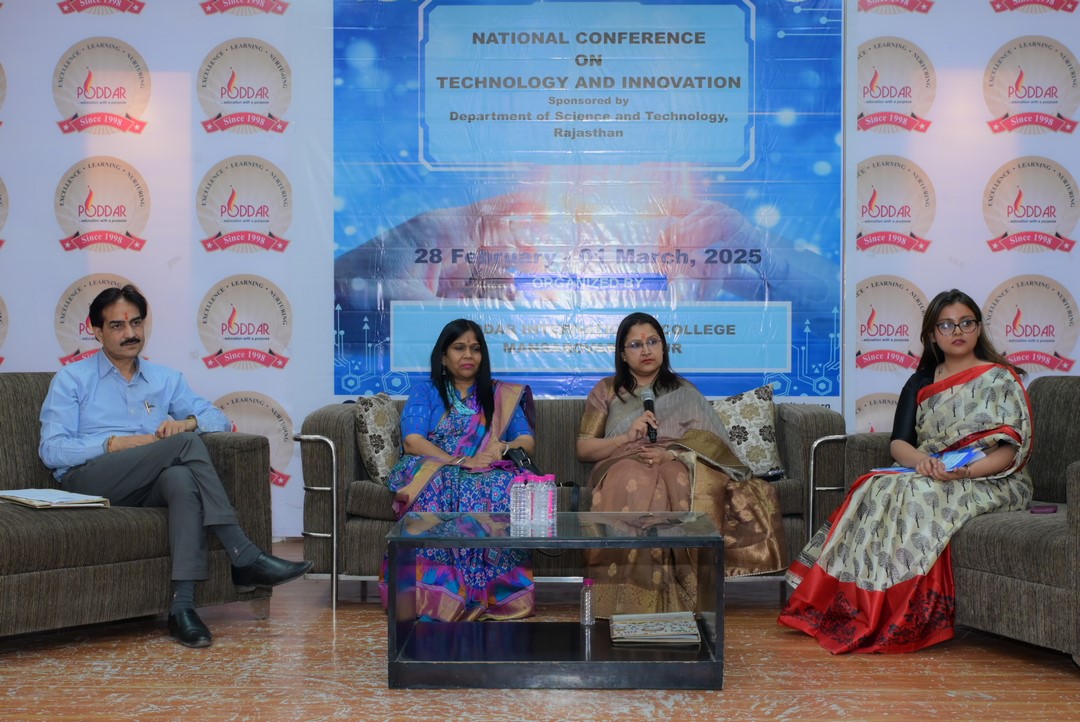
The evolution of artificial intelligence has reached a pivotal moment: AI systems are no longer limited to answering questions or completing simple tasks—they are transforming into autonomous agents capable of executing complex, real-world workflows. These advanced AI agents are moving beyond basic chatbot functionality to become true digital colleagues that can manage supply chains, conduct scientific experiments, and even deliver personalized healthcare. This article explores how AI agents are redefining productivity, innovation, and efficiency across industries. Expert faculty members from Poddar International College, a renowned IT college in Jaipur, share insights on the new developments in the domain of artificial intelligence.

From
Reactive to Proactive Agents
Early chatbots, such
as customer service bots, operated within narrow boundaries—providing scripted
responses based on predefined rules. A BCA course in Jaipur explores how today’s
AI agents, powered by large language models (LLMs) and reinforcement learning,
can:
1.
Understand Context and Goals: Instead of waiting for explicit instructions,
they infer objectives from conversations and environmental data.
2.
Take Autonomous Actions: They book meetings, order inventory, or
adjust medical treatments without human micro-management.
3.
Learn and Adapt: Through interactions, they refine decision-making strategies
for improved accuracy.
AI
Agents in Action
Let us discuss the
role of artificial intelligence in various domains such as supply chain
management, scientific research, and healthcare.
1.
Autonomous Supply Chain Management
AI agents are
revolutionizing logistics by predicting shortages, negotiating with suppliers,
and rerouting shipments in real time.
● Example: If a factory faces a
raw material delay, an AI agent can:
● Identify alternate
suppliers
● Adjust production
schedules across connected factories
● Notify customers of
updated delivery times
● Impact: Reduced downtime,
optimized costs, and resilience against disruptions.
2.
AI-Driven Scientific Research
AI agents are being
deployed in labs to:
● Run high-throughput
experiments (e.g., drug discovery)
● Analyze data and
propose hypotheses.
● Collaborate with
researchers (via natural language)
● A breakthrough case
discussed in the MCA course in Jaipur is the one where, in 2023, an AI
system named "Coscientist" autonomously designed and executed a
complex chemical reaction, marking a milestone in automated science.
3.
Personalized Healthcare Agents
Beyond chatbots
offering generic advice, AI healthcare agents can now:
● Analyze patient EHRs
(electronic health records)
● Recommend tailored
treatment adjustments (e.g., for diabetes)
● Monitor real-time
vitals and alert doctors to anomalies
● Future Potential: AI
could manage chronic conditions 24/7, reducing hospital visits.
Challenges
and Ethical Considerations
While AI agents
promise immense benefits, challenges remain:
1.
Trust & Accountability: Who is responsible if an AI makes a critical
error? Lack of responsibility is a challenge that needs to be addressed
immediately. Artificial intelligence is prone to making errors that can cost
significant financial and other losses. Hence, clarity on accountability is
mandatory.
2.
Job Displacement: How will workflows adapt when AI agents automate roles? Job
displacement is perhaps one of the biggest challenges faced due to increased
automation through artificial intelligence. Though new roles are emerging, the
question remains whether they are enough to cater to the job seekers in the
market. Therefore, individuals must upskill themselves. At Apple Lab in
Jaipur, students at Poddar International College upskill themselves
to remain relevant in the job market.
3.
Security Risks: Agents with system access could become targets for hacking,
posing serious security risks.

The
Road Ahead
We are entering an era
where human-AI collaboration will resemble teamwork with intelligent
colleagues—not just tools. Businesses and institutions like top BCA colleges
in Jaipur and across India must prepare by:
1. Implementing
governance frameworks for AI decision-making. This will ensure proper rules and
regulations to ensure ethical conduct and data security while using AI.
2. Upskilling
workforces to supervise and augment AI agents. Skill development is essential
if the current workforce needs to adapt to the changing dynamics in various
sectors. Artificial intelligence is being used in almost every industry,
requiring individuals and organizations to dedicate time and finances to
upskilling.
3. Designing
fail-safes to prevent unintended consequences. Complete accuracy in
AI-generated results is yet to be achieved. This is also because of its heavy
reliance on data training, where the data may have discrepancies.
Conclusion
The next generation of
AI agents will transform industries by functioning as proactive, autonomous
partners—moving far beyond chatbots. Organizations like Poddar International
College, one of the top MCA colleges in Jaipur for AI research, are
leading the charge by preparing students to harness these powerful tools and
address their ethical implications. The future is not about humans versus AI.
It is about humans and AI working together to achieve what was once
unimaginable.

Comments
Post a Comment