SCIENCE AND INNOVATION WITH SPECIAL REFERENCE TO THE ZOOLOGY

Introduction
Science and innovation are dynamic and interconnected forces that drive progress and development across various fields. Science is a systematic enterprise that builds and organizes knowledge in the form of testable explanations and predictions about the universe. It encompasses a wide range of disciplines, including physics, chemistry, biology, astronomy, and more. Scientists employ rigorous methods such as observation, experimentation, and analysis to discover and understand the fundamental principles governing the natural world. The pursuit of scientific knowledge has led to groundbreaking discoveries, technological advancements, and a deeper comprehension of the complexities of our universe.
Innovation is the process of introducing novel ideas, products, or methods that bring about positive change and enhance efficiency, productivity, or quality of life. It often arises from the application of scientific knowledge to address practical challenges. Innovation can take various forms, including technological advancements, process improvements, and creative solutions to societal problems. It is a driving force behind economic growth and societal progress, fostering competitiveness and adaptability in an ever-evolving global landscape.
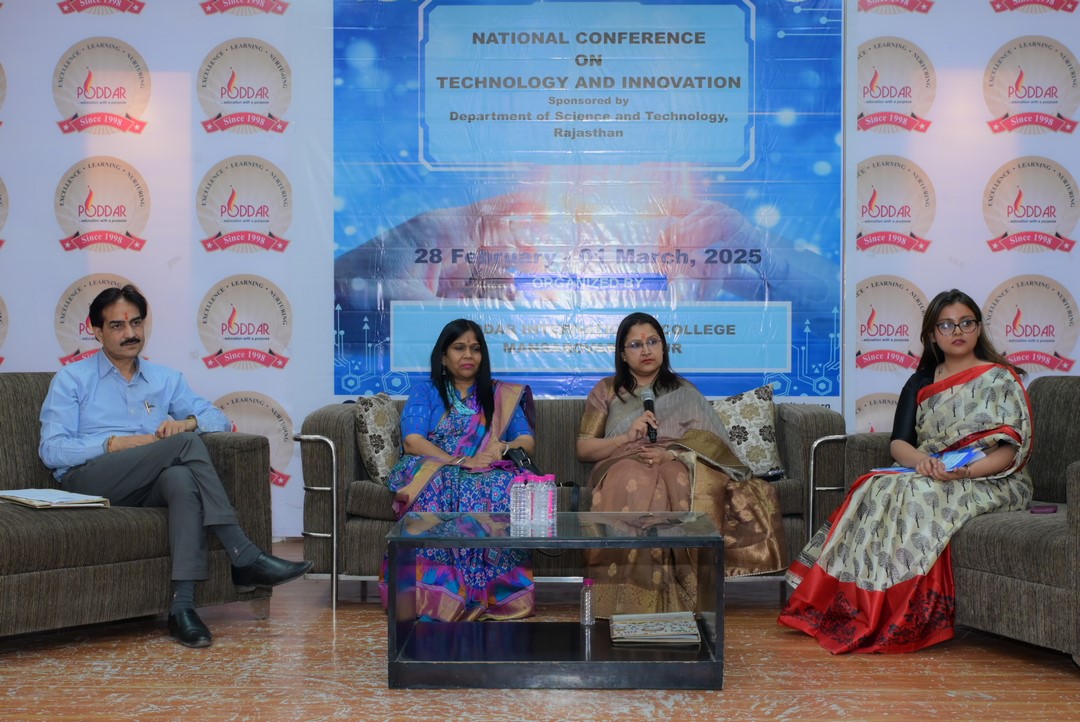
Innovation lies at the heart of Poddar International College's approach to Education. From cutting-edge teaching methodologies to state-of-the-art facilities, innovation permeates every aspect of the college experience. Poddar International College offers top UG and PG courses in science along with other diverse courses.
Interconnection between science and innovation
Science and innovation are intricately connected, with scientific discoveries providing the foundation for innovative breakthroughs. The relationship is cyclical: scientific research sparks new ideas and possibilities, while innovation, in turn, generates new challenges and questions that drive further scientific inquiry. This synergy fuels a continuous cycle of progress, leading to advancements in various fields, from medicine and technology to energy and environmental sustainability.
In the field of zoology, innovation plays a vital role in expanding our understanding of the animal kingdom, contributing to conservation efforts, and inspiring advancements in various sectors. Here are a few ways innovation intersects with zoology:
Technological Advances in Observation and Monitoring:
Innovations in camera traps, drones, and remote sensing technologies have revolutionized wildlife monitoring. These tools allow scientists to observe animal behavior in their natural habitats without causing disturbance. GPS tracking devices and satellite technology have enabled researchers to track the movements of animals over vast distances, providing valuable insights into migration patterns, habitat use, and population dynamics.
Genomic Research and DNA Analysis:
Advances in DNA sequencing technology have revolutionized zoological research by allowing scientists to unravel the genetic codes of various species. Genomic analysis aids in understanding evolutionary relationships, population genetics, and the identification of endangered species. It also helps in developing conservation strategies based on genetic diversity.
Bioacoustics and Communication Studies:
Innovative technologies in bioacoustics have enabled researchers to study animal communication and behavior through the analysis of vocalizations. Automated recording devices and sophisticated software help in deciphering complex animal vocalizations, providing valuable information about mating rituals, territory establishment, and intraspecies communication.
Conservation Technologies:
Zoologists leverage innovative technologies for conservation purposes, including non-invasive methods for population estimation and health assessments. Assisted reproductive technologies, such as in vitro fertilization and artificial insemination, are applied to conserve endangered species with low reproductive rates.
Behavioral Ecology and Field Studies:
Innovations in tracking and data collection devices, such as accelerometers and bio logging instruments, assist researchers in studying animal behavior in unprecedented detail. High-tech field equipment, such as miniature environmental sensors, allows scientists to gather comprehensive data on the ecological conditions experienced by animals in their natural environments.
Synthetic Biology and Conservation:
Emerging technologies in synthetic biology offer the potential to address conservation challenges. For example, the development of synthetic alternatives to animal products can contribute to biodiversity preservation.
To conclude, it can be said that the collaboration between scientists and innovators is crucial for addressing complex global challenges. The application of scientific knowledge through innovation has the potential to revolutionize industries, improve healthcare, mitigate environmental issues, and enhance overall human well-being. Governments, businesses, and research institutions play pivotal roles in fostering environments that encourage both scientific exploration and the translation of knowledge into practical solutions. Embracing a culture of science and innovation is essential for societies to thrive and navigate the complexities of the modern era. Innovation in zoology not only enhances our scientific knowledge of the animal kingdom but also provides practical tools and strategies for conservation efforts. These innovations enable scientists to make informed decisions about wildlife management, contribute to biodiversity conservation, and foster a deeper appreciation for the incredible diversity of life on Earth.

Comments
Post a Comment