Pioneering the Future: Career Insights into Machine Learning and Artificial Intelligence

Machine Learning (ML) and Artificial Intelligence (AI) are no longer just buzzwords; they are transformative technologies that are reshaping industries, driving innovation, and altering the way we live and work. As these fields evolve, they offer a plethora of exciting career opportunities for those equipped with the right skills and knowledge. This article delves into the future of ML and AI, exploring the career paths available, the skills required, and the impact these technologies are having across various sectors. Poddar International College is the Best Computer Science Institute in Rajasthan.
The Evolution of ML and AI
Understanding ML and AI
ML is a subset of AI that focuses on developing algorithms that allow computers to learn from and make predictions or decisions based on data. AI encompasses a broader range of technologies aimed at creating systems that can perform tasks that typically require human intelligence, such as visual perception, speech recognition, decision-making, and language translation.
Current Trends
Deep Learning: A subset of ML that uses neural networks with many layers (hence "deep") to model complex patterns in large datasets. Applications include image and speech recognition.
Natural Language Processing (NLP): Techniques that enable machines to understand and respond to human language. This includes virtual assistants like Siri and Alexa, chatbots, and automated translation services.
Reinforcement Learning: A type of ML where an agent learns to make decisions by taking actions in an environment to maximize cumulative rewards. This is particularly useful in robotics and game playing.
Future Directions
Explainable AI (XAI): As AI systems become more complex, there is a growing need for transparency. XAI aims to make AI decisions understandable to humans, ensuring trust and compliance with regulations.
AI Ethics and Fairness: Developing AI systems that are unbiased, fair, and ethically sound is becoming a major focus. This involves creating frameworks and guidelines to ensure AI does not perpetuate or exacerbate societal inequalities.
Quantum Machine Learning: Combining quantum computing and ML to solve complex problems more efficiently than classical computers. This field is still in its infancy but holds tremendous potential.
Career Paths in ML and AI
Data Scientist
Role: Analyze large sets of data to extract meaningful insights and build predictive models using ML algorithms.
Skills: Programming (Python, R), statistical analysis, data visualization, and familiarity with ML frameworks like TensorFlow and PyTorch.
Machine Learning Engineer
Role: Design, develop, and deploy ML models. They work closely with data scientists to implement algorithms in production environments.
Skills: Strong programming skills, knowledge of ML frameworks, understanding of software engineering principles, and experience with cloud platforms like AWS or Google Cloud.
AI Research Scientist
Role: Conduct cutting-edge research to advance the field of AI. This includes developing new algorithms, models, and applications.
Skills: Advanced knowledge of mathematics, statistics, and computer science. Experience in conducting original research and a strong publication record are often required.
NLP Engineer
Role: Develop applications that process and analyze human language. This includes building chatbots, virtual assistants, and sentiment analysis tools.
Skills: Proficiency in linguistics, programming, and NLP frameworks such as spaCy, NLTK, or BERT.
Computer Vision Engineer
Role: Develop systems that can interpret and understand visual information from the world. Applications include facial recognition, autonomous vehicles, and medical image analysis.
Skills: Knowledge of image processing techniques, ML, and computer vision libraries like OpenCV and TensorFlow.
AI Ethicist
Role: Ensure AI systems are developed and used ethically. This includes assessing AI systems for bias, fairness, and compliance with ethical standards.
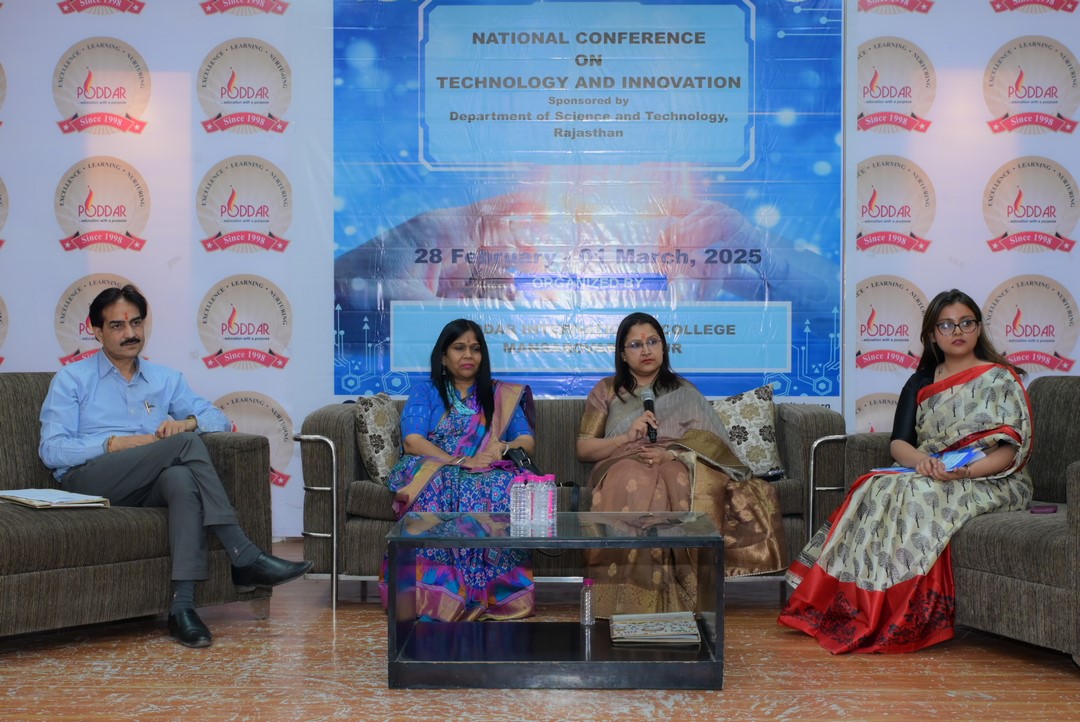
Skills: Understanding of AI and ML, knowledge of ethical frameworks, and strong analytical and communication skills. Poddar International College Conduct Seminars, Webinars, Workshops etc.
Preparing for a Career in ML and AI
Educational Pathways
Degrees: A bachelor's degree in computer science, data science, electrical engineering, or a related field is typically required. Advanced roles often require a master's degree or Ph.D.
Online Courses and Bootcamps: Numerous platforms offer courses in ML and AI, providing flexible and accessible learning options. These can be particularly useful for gaining practical skills and experience.
Key Skills
Programming: Proficiency in languages such as Python, R, and Java.
Mathematics and Statistics: Strong understanding of linear algebra, calculus, probability, and statistics.
ML Frameworks: Familiarity with frameworks like TensorFlow, PyTorch, and scikit-learn.
Data Handling: Skills in data manipulation, cleaning, and preprocessing.
Domain Knowledge: Understanding the specific industry where ML and AI are applied.
Gaining Practical Experience
Projects: Engage in personal or academic projects that involve building and deploying ML models.
Internships: Seek internships at tech companies, research labs, or startups to gain hands-on experience.
Competitions: Participate in ML and AI competitions on platforms like Kaggle to hone skills and showcase expertise.
The Impact of ML and AI Across Industries
Healthcare
ML and AI are transforming healthcare by enabling personalized medicine, improving diagnostic accuracy, and optimizing treatment plans. AI-driven tools can analyze medical images, predict disease outbreaks, and streamline administrative tasks.
Finance
In finance, ML algorithms are used for fraud detection, risk management, and algorithmic trading. AI-powered chatbots provide customer service, while predictive analytics help in investment decisions.
Manufacturing
AI and ML enhance manufacturing through predictive maintenance, quality control, and supply chain optimization. Smart factories leverage IoT devices and AI to improve efficiency and reduce downtime.
Retail
Retailers use AI to personalize customer experiences, manage inventory, and optimize pricing strategies. Recommendation engines, powered by ML, drive sales by suggesting products based on customer behavior.
Transportation
Autonomous vehicles rely on ML for navigation, obstacle detection, and decision-making. AI optimizes logistics and fleet management, improving efficiency and reducing costs.
Conclusion
The future of machine learning and artificial intelligence is bright, with these technologies poised to revolutionize numerous industries. For aspiring tech innovators, the field offers diverse and exciting career opportunities. By acquiring the necessary skills, pursuing relevant education, and gaining practical experience, individuals can position themselves at the forefront of this technological revolution. As ML and AI continue to evolve, those prepared to embrace these changes will be well-equipped to pioneer the future and drive innovation in their chosen fields. Poddar International College is the Best Computer Science Institute in Jaipur.

Comments
Post a Comment